Why Free Trials Are Usually Not a Good Idea
 Adrian Guerra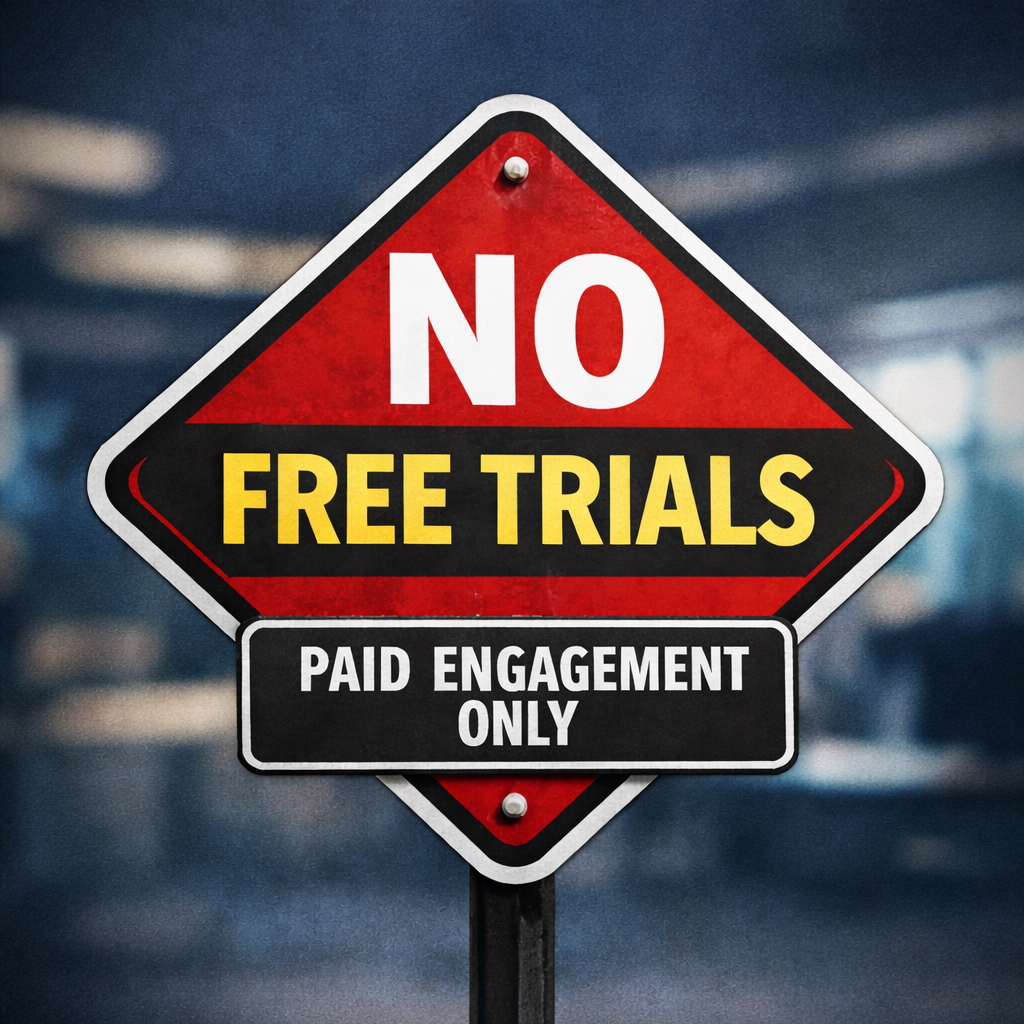
Free trials sound like the obvious choice when you're launching something new.
Lower friction.
Easier yes.
More “interest.”
But in practice, free trials don't reveal what founders actually need to learn.
Free Trials Don't Tell You Anything Useful
Free trials don't tell you:
- •what truly sells
- •what people actually value
- •what messaging converts
- •what outcomes matter enough to pay for
Because anyone can say yes to free.
Free signals curiosity.
Paid signals commitment.
And those two are not the same thing.
Early-Stage Founders Don't Need Interest. They Need Feedback.
When you're early, interest is misleading.
Clicks, signups, and trial users feel encouraging, but they don't answer the most important questions:
- •What will people actually pay for?
- •Which outcomes do they care about most?
- •Where does real value show up?
- •What makes someone take action now?
Those answers only appear when money is on the line.
The Real Problem With Free Trials
Free trials feel safe.
They protect the founder from rejection and make growth look easier than it really is.
But they delay the only thing that matters:
learning whether you're solving a real, painful problem.
Without payment, expectations stay vague.
Feedback stays shallow.
Commitment stays low.
A Better Approach: Paid, With Reduced Risk
My take is simple: skip the free trial.
Instead, push for a paid engagement, even if it's small.
Then reduce the risk with a refund guarantee.
If the customer isn't satisfied, refund them. No drama.
This structure changes everything.
What You Get When People Pay
The moment someone pays, clarity increases:
- •you attract real buyers
- •expectations become explicit
- •value delivery becomes concrete
- •positioning sharpens quickly
You stop optimizing for signups and start optimizing for outcomes.
Final Thought
Free trials feel comfortable.
But comfort slows learning.
If you want to build something people will actually pay for, put a price on it early and listen carefully to what happens next.
That's where real market feedback lives.